The Masai Mara is the Kenyan continuation of the Serengeti ecosystem: 1,500 km² of open savanna, rolling hills and the Mara River. From July to October it hosts the dramatic northern arc of the Great Migration, with crossings that have become some of the most photographed wildlife events on earth.
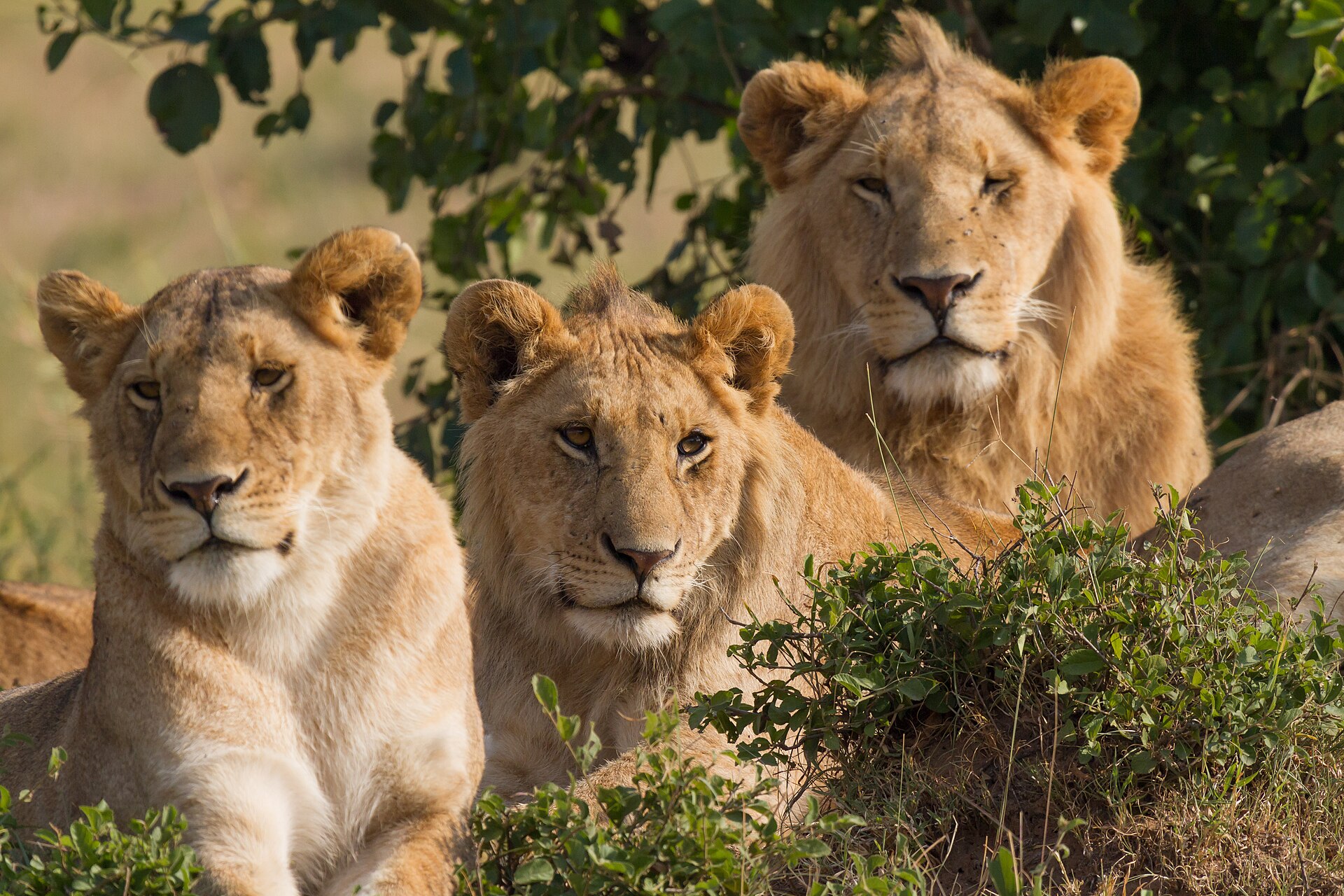
Beyond the migration, the Mara is exceptional year-round. The resident game density is among the highest in East Africa — lion in twenty-strong prides, cheetah on the open plains, and one of the world's most reliable populations of black rhino in the Mara Triangle.
We design Mara safaris using the private conservancies that ring the reserve — Mara North, Naboisho, Olare Motorogi, Ol Kinyei. Smaller camps, off-road driving, walking and night drives are all possible there, and so are the great river crossings just inside the reserve.
Highlights
- Mara River crossings (July–October)
- Some of Africa's highest densities of lion and cheetah
- Black rhino in the Mara Triangle
- Maasai culture — authentic visits, not staged shows
- Private conservancies: off-road, walking, night drives
- Hot-air balloon flights at sunrise
When to go
July–October for the migration and Mara River crossings. January–March for green landscapes, newborns and clear skies. The Mara is genuinely a year-round park.
Wildlife
All Big Five, with exceptional sightings of lion, cheetah and leopard. The Mara is one of the few places where you can reasonably hope to see a hunt within a single safari.
Why we love it
Because we know the conservancies as well as the reserve. We can put you in a camp where you'll fall asleep to lions calling — and still drive into the heart of the crossings in the morning.